You've seen it. You just didn't know what you were looking at.
Your teenager comes home from school. You ask: "How was your day?" They say "fine" — and disappear into their room. Door closed. Phone on. Conversation over.
You tell yourself it's normal. All teenagers are like this, right?
Maybe. But what if the reason your teen doesn't talk to you about their day is that there's nothing to talk about? No conversations in the hallway. No inside jokes. No one who saved them a seat at lunch.
What if your teen isn't being "a typical teenager" — but is actually, quietly, deeply lonely?
These aren't dramatic numbers from a documentary. This is the reality in most households right now. Including, possibly, yours.
The signs are everywhere — but they don't look like what you'd expect.
You're waiting for your teen to come to you crying. To say "I have no friends." To ask for help. But that's not how it works. Social anxiety is silent. It hides behind normal-looking behaviour.
"They're always on their phone."
What's actually happening: They're not addicted to their phone. They're hiding in it. Because the real world — hallways, lunch tables, group projects — feels like a minefield they don't have the tools to navigate.
"They never want to go anywhere."
What's actually happening: They want to go. They fantasize about being invited, being included, being the kid who walks in and people are happy to see them. But the gap between wanting it and knowing how to do it feels impossible to cross.
"They know the answer but never raise their hand."
What's actually happening: They've rehearsed the answer in their head three times. It's correct. But the thought of 30 people turning to look at them makes their heart race so fast they can't breathe. So they stay quiet. Again.
"They're just an introvert. It's their personality."
What's actually happening: Introversion is a preference. Social anxiety is a prison. Your teen may be an introvert — but they shouldn't be afraid to order food at a restaurant, or feel sick before a school presentation, or spend every weekend alone in their room because they don't know how to say "hi" to someone new.
What your teenager actually feels — and will never tell you.
You can't fix what you don't understand. So let me show you what it looks like from the inside — from the perspective of a teenager living with social anxiety every single day.
The school cafeteria. Lunchtime.
A group project. The teacher says: "Find a partner."
A birthday party invitation. (Or worse — no invitation.)
You ask: "Why don't you invite someone over?"
I know exactly what that feels like. Because I was that teenager.

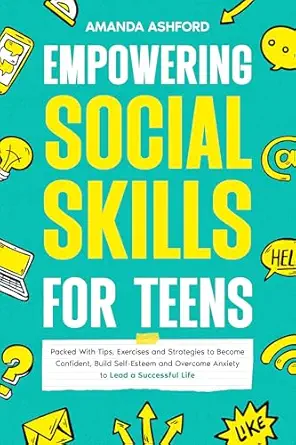
I wrote the book I wish I'd had at 14.
Not a textbook. Not a lecture. Not a list of tips from someone who's never felt their heart pound just from walking into a room.
I wrote "Empowering Social Skills for Teens" because I know what it's like to believe you're broken — when really, you're just untrained.
Your teen doesn't need to "grow out of it." They need the tools to grow through it.
Available on Amazon · ⭐ 4.8 · 35 verified reviews
The things you say to help — that actually make it worse.
You mean well. Every word comes from love. But some of the most common things parents say to a socially anxious teen don't help — they deepen the wound.
The left column shames. The right column supports. Your teen needs the right column — desperately. But most parents don't know it exists, because nobody taught them either.
What happens when social anxiety goes unchecked into adulthood?
This is the part most parents don't want to think about. But you need to — because the window to act is right now.
At 18, they go to college. New city, new people, no familiar faces. They don't join clubs. They don't go to orientation events. They sit in their dorm room, alone, and wonder why everyone else seems to be making friends effortlessly. Some drop out — not because of grades, but because of loneliness.
At 22, they enter the job market. They're qualified. They're smart. But they can't make it through an interview without their hands shaking. They take the first job offered — not the best one — because the thought of more interviews is unbearable. Networking? Out of the question.
At 25, relationships become the next minefield. They want connection — deeply — but they don't know how to be vulnerable. They don't know how to read social cues, set boundaries, or express needs. They either cling too hard or push people away.
At 30, they have a job, maybe a partner, maybe not. But something is always missing. They still feel like they're performing in every conversation. They still rehearse sentences before meetings. They still feel like everyone else got a manual for being human — and they didn't.
The cost isn't loud. It's quiet. It's a lifetime of "I could have" and "I should have" and "why can't I just be normal?"
And your teen is on that path right now. Not because you failed them — but because nobody gave them the tools.
There's a reason this book has 4.8 stars and parents are buying copies for entire classrooms.
Most books about teen social skills are written by therapists for therapists. They're clinical. They're dry. A teenager picks one up, reads two pages, and never opens it again.
This book is different. Here's why it actually works:
It starts where your teen actually is. Not with advice. With recognition. The first chapters describe their reality so accurately that teens keep saying: "How does she know?" That's the hook — when they feel understood, they keep reading.
It includes real exercises, not theory. Confidence trackers. Conversation challenges. A digital detox plan. A "first impression" framework they can use tomorrow. These aren't busywork — they're tools that create real change in real interactions.
It covers the stuff nobody talks about. How to handle awkward silences. How to join a group that's already talking. How to deal with being left out. How to set boundaries without losing friends. How to stop comparing yourself to everyone on social media.
It normalizes the struggle. Through real case studies from teens who felt the same way — and found their way through. Not overnight. Not perfectly. But meaningfully.
It builds leadership, not just survival. The later chapters don't just help teens "cope" — they help them lead. Public speaking. Assertiveness. Setting healthy boundaries. Managing stress. These aren't bonus skills — they're the difference between surviving socially and thriving.