How to Help Your Teen Find Their People
When your kid is lonely, left out, or quietly drifting — and nothing you try seems to land.

- 66-page PDF — read in one evening, use the next day
- The four phrases parents say that close the door — and what to use instead
- Fixing vs facilitating: how to help without making it worse
- The 5-level micro-moves ladder for any teen, even a quiet one
What's inside
Four bonuses, included free
Companion PDFs you can print, mark up, or keep on your phone. Built for the moment, when you can't open the full guide.
Six dreaded scenarios — coming home crying, getting dropped by the friend group, refusing to leave their room, saying something frightening. For each: what to do in the first five minutes, before bed, the next day, and the specific signals that mean you call a professional instead.
The four phrases that close the door — and their replacements — on one side. The fixing-vs-facilitating one-question test and five facilitation moves on the other. Print it. Tape it inside a cabinet. Reach for it on the hard nights.
The 5-level ladder explained, plus a structured tracker — one row per attempt, with built-in debrief. Tiny social courage, logged. Helps you see actual movement on the days it feels like nothing is changing.
Twelve real moments you'll recognize — "I just don't fit in there," "Why even bother trying," them walking in silently — with the sentence you naturally reach for, and the one that actually lands. Pocket-sized rescue for when you blank.
Peek inside the guide
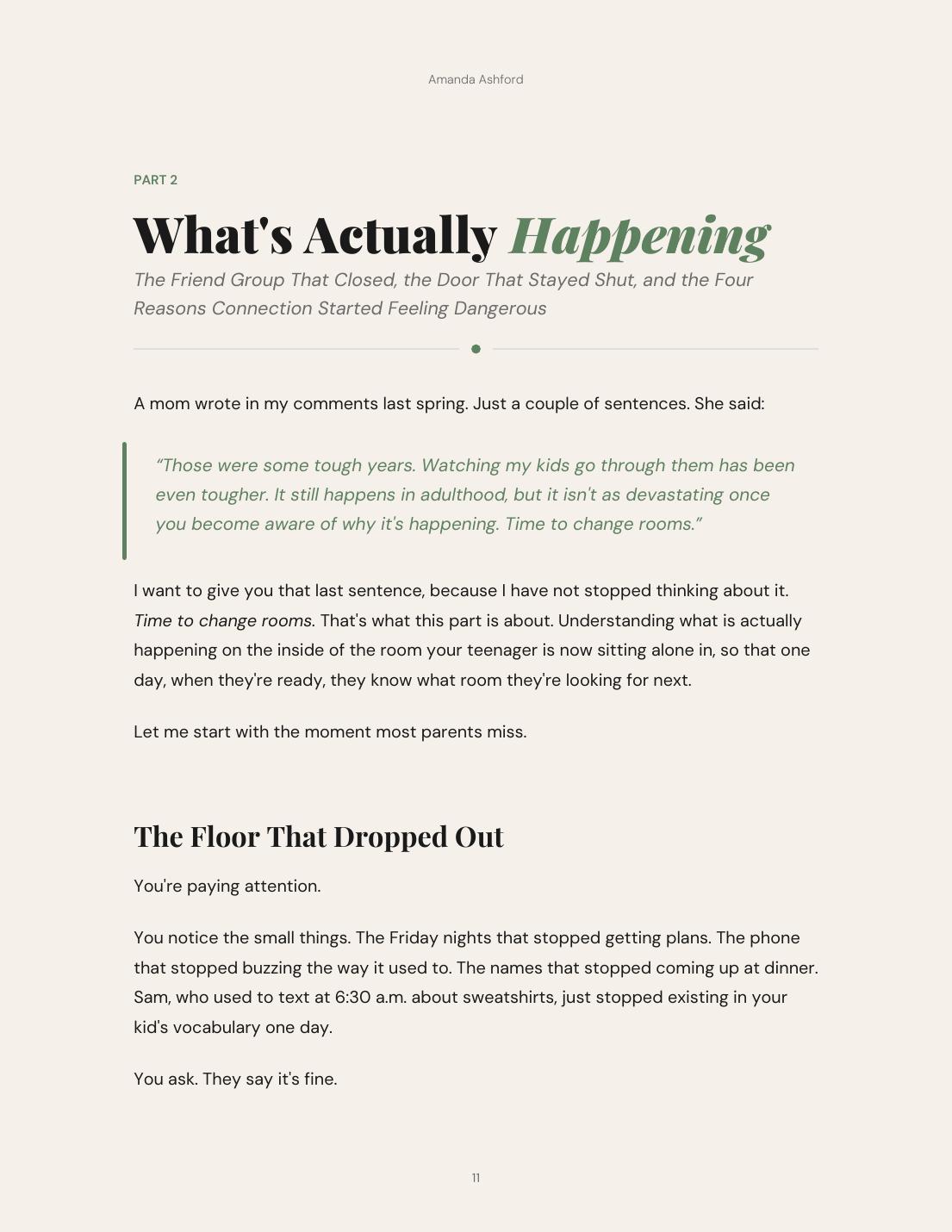
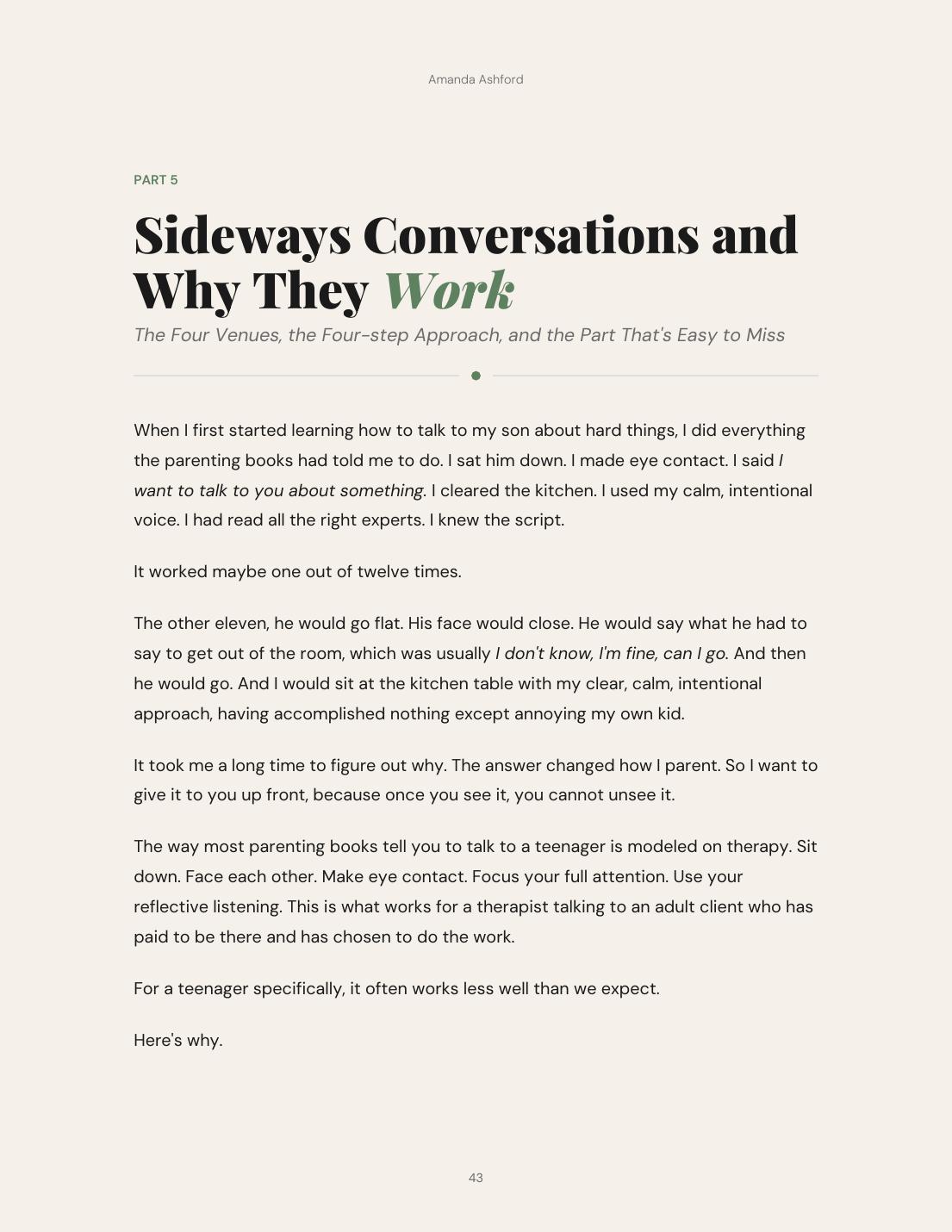
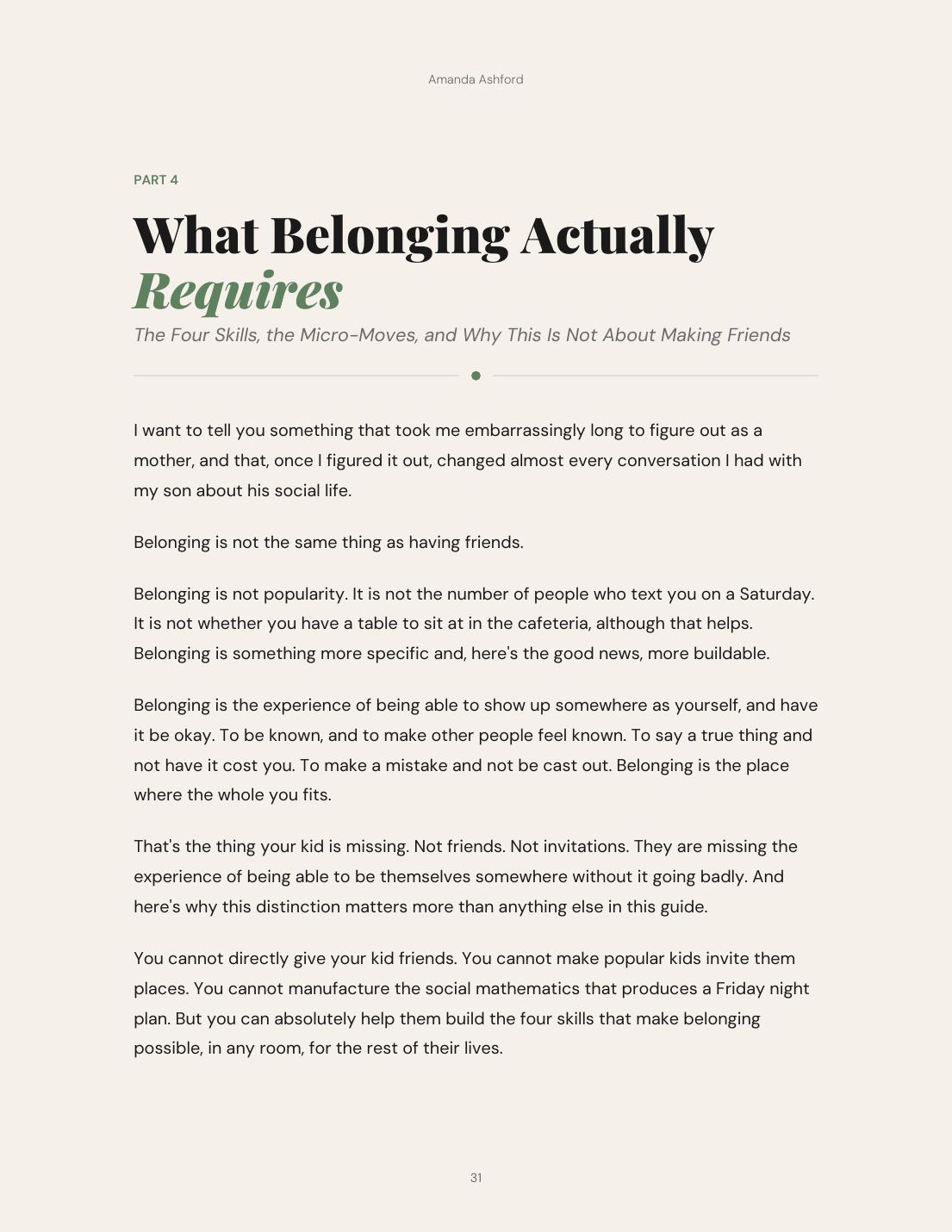
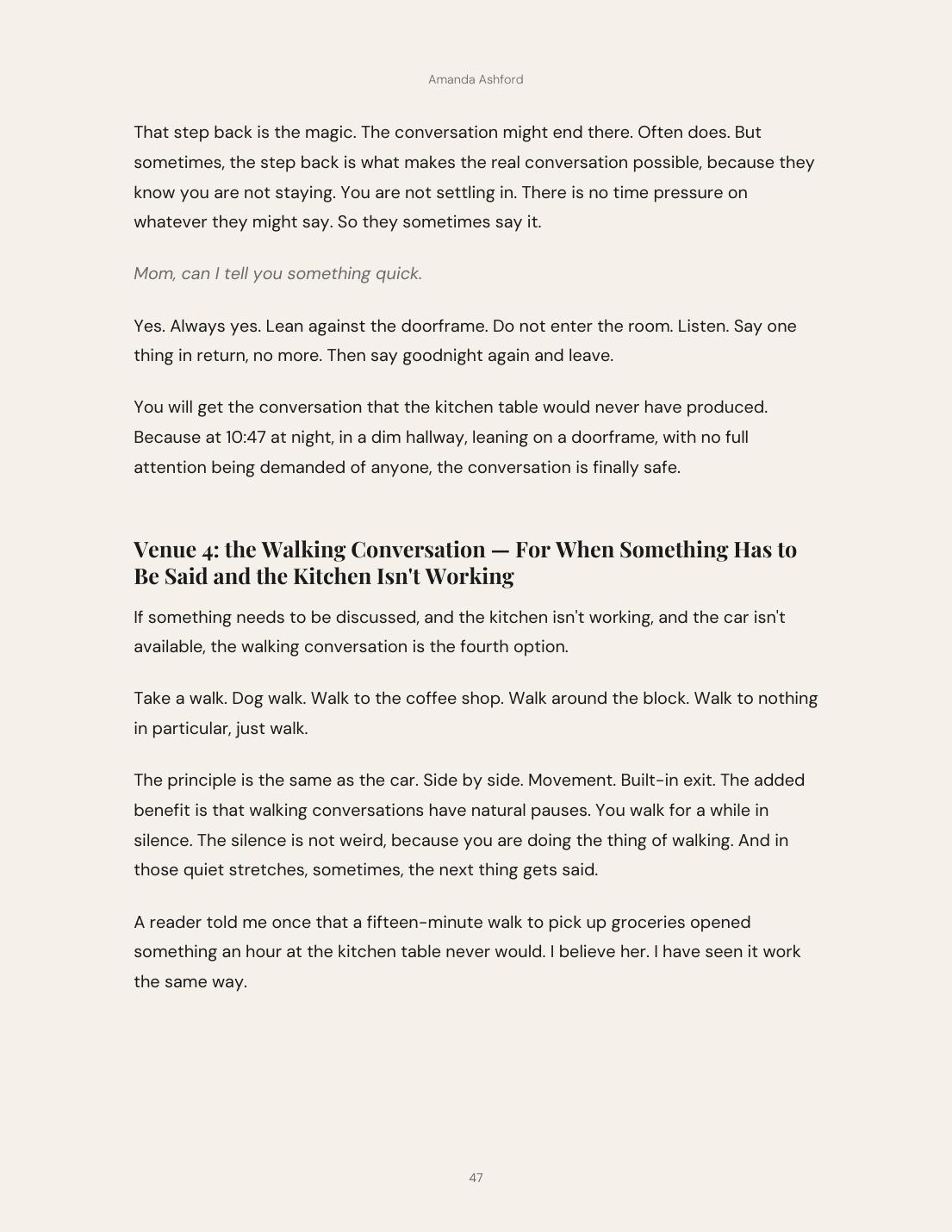
If you've ever watched your teen and thought…
- "She comes straight home and goes to her room. No friends at all."
- "He says everyone hates him. I don't know if that's true or just how it feels."
- "She used to have a group. They dropped her. I don't know what happened."
- "I keep telling him to just put himself out there. It only makes him retreat further."
- "I want to fix this for her. I don't know if I'm helping or making it worse."
You're not making it worse on purpose. You're reaching for the parenting toolkit that worked when your child was eight — when "find some friends" actually translated to "go play with the neighbor kid." With a teen, the same well-meaning sentences land like accusations. This guide rewires what to do instead.
What changes after the guide
Not a fix. A different baseline. Slow, real, and durable.
Who wrote this

Common questions
Right now, she's in her room. He's on his phone. Tonight is going to look like every other night.
You can read this in 90 minutes. The Note Card is printable from page one. You can use one new sentence before bedtime.