Article · 12 min read
What You Say to Your Teen About Money Is Shaping Their Financial Future Right Now
And most parents have no idea it's happening — until it's almost too late.

And most parents have no idea it's happening — until it's almost too late.
This article is different from everything you've read about teens and money.
It doesn't tell you to open a savings account for them or give them a weekly allowance. It doesn't suggest apps, worksheets, or family finance meetings. It doesn't blame you.
It does something harder and more useful: it explains what's actually being built inside your teenager's mind right now, why the most common parenting responses quietly backfire, and what parents who've changed the trajectory did differently.
By the end, you'll have a clear picture of what's happening, and five specific conversations you can start this week.
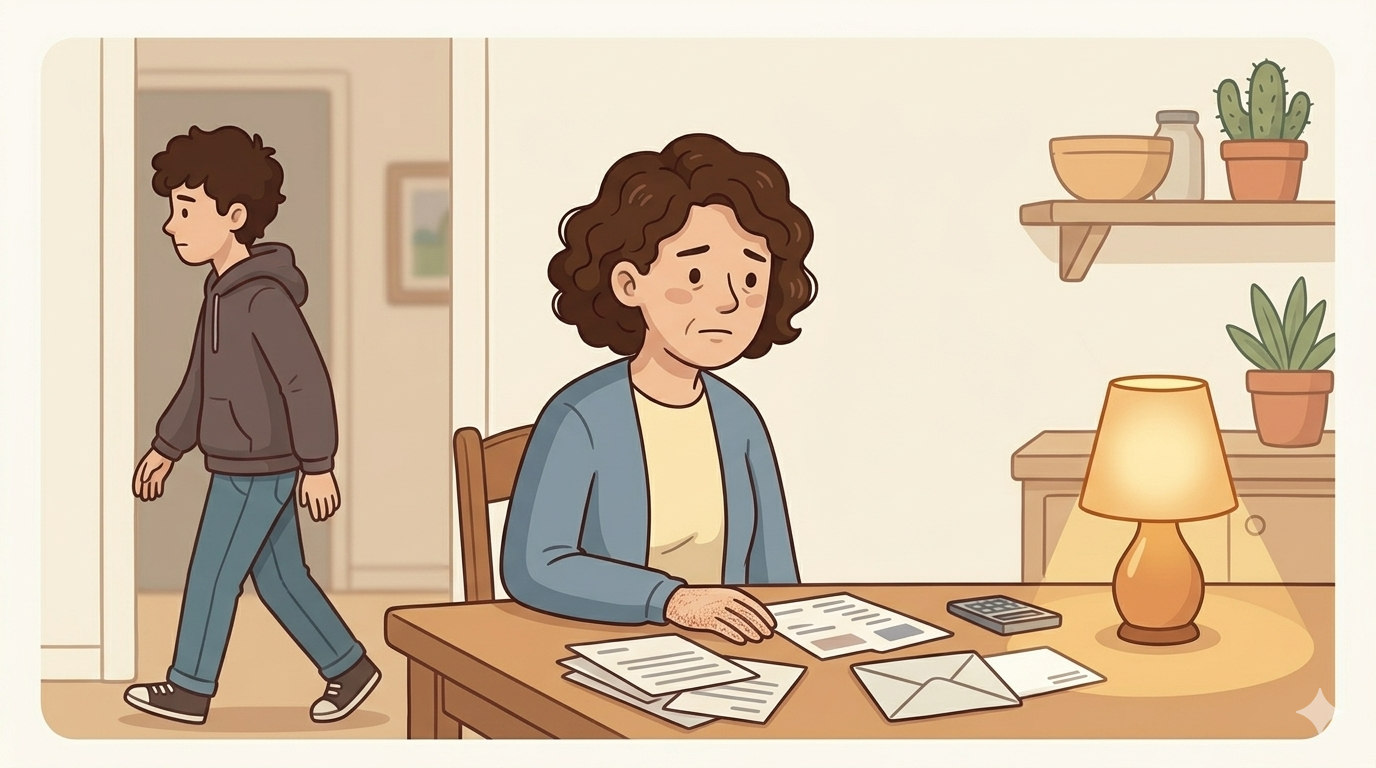
Most parents don't say it directly. But it's there: a quiet, persistent fear about their child's financial future.
Not about right now. About later. About 22, 26, 30 years old. About whether they'll be able to build a life, support themselves, not call you in a panic because rent is due and the account is empty.
The worry builds from small things. The way they spend everything the moment it's in their hands. The complete indifference when you try to explain money. The sense that the real-world financial skills they'll need are somehow not getting through.
You've tried to help. You've said the things parents say.
"You need to save more."
"Money doesn't grow on trees."
"When you're paying for it yourself, you'll think differently."
Nothing changed. Or your teen tuned out. Or the conversation turned into an argument and you stopped having it.
You're not doing anything wrong. The problem isn't what you're saying. It's that none of those conversations address what's actually happening underneath.
Before we talk about what helps, let's understand what's really going on. Not what it looks like from the outside, but what's forming inside.
Your teenager isn't just learning or not learning to budget. They're forming beliefs about money. Deep, largely unconscious beliefs about what money means, who it's for, whether they deserve it, and what they're capable of earning and keeping.
They're not getting these beliefs from lectures or conversations. They're absorbing them from the smallest, most ordinary moments. A comment you make at the grocery store. How you react when a bill arrives. What you say, and what you don't say, when they ask for something expensive.
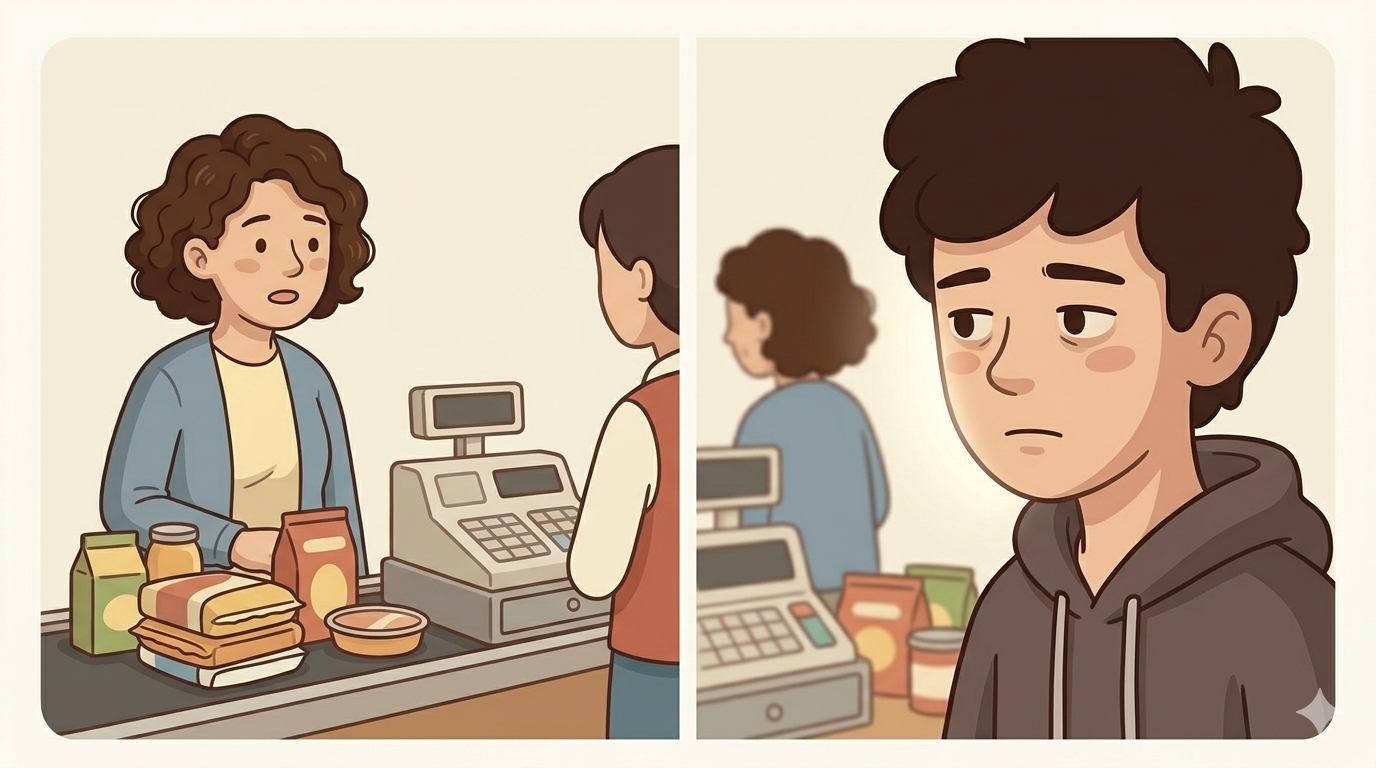
Your teen is quietly drawing conclusions. And those conclusions are hardening into beliefs they'll carry into their 20s, 30s, and beyond.
Here's what that looks like in practice:
One set leads to a person who works hard their whole life and wonders why there's never enough. The other leads to someone who builds, earns, and feels in control of their life.
The good news: These beliefs aren't fixed yet. The teenage years are still a wide-open window. What forms now can still be shaped. It doesn't require becoming a financial expert. It requires knowing what to say, and what to stop saying, in the moments that actually matter.
It's two years from now. Your teenager is 17, getting ready to leave for college. You're having a real conversation about money. They ask you how much you make. They're not being nosy. They're thinking about their own future, their own choices. And they're not afraid to talk about it. You realize, sitting there, that something shifted somewhere along the way.
Most parents believe that if they give their children a good education, or even a financial head start, the money piece will take care of itself.
The evidence says otherwise.
You know people with two degrees who live paycheck to paycheck. You've heard stories of C-students who went on to hire the straight-A graduates.
None of them finished college. Not one. And yet the advice we give teenagers is still: "Study hard and you'll be fine."
You've seen it: kids from wealthy families who spent everything their parents built and created nothing themselves. Money handed down rarely produces someone fulfilled or financially strong on their own terms.
So if education doesn't guarantee it, and money doesn't guarantee it, what does?
These aren't dramatic conversations. They're the small, forgettable moments at the dinner table, in the car, at the checkout line. And they're where financial beliefs are made.
You don't need to become a financial expert. You don't need to have all the answers. You need to know what to say, and what to stop saying, in the moments that actually shape how your teenager thinks about money.
Instead of correcting and shaming, try this: ask them to walk you through what they bought and why. Then help them see, not judge, what happened. "So you had $50, you spent $30 on this, $15 on that. What do you think about that now?"
One conversation like this builds more financial awareness than ten lectures about responsibility. Because you're treating them as someone capable of reflection, not someone who did something wrong.
Instead of "we can't afford it," try: "That's not in our budget right now. Let's figure out how you could earn part of it yourself."
This changes the story from "nice things are not for us" to "I can work toward what I want." That single shift in framing matters more than you know.
When your teenager expresses a desire to earn, that's a moment worth catching. Don't redirect them to schoolwork. Ask what they're thinking. Help them explore one real option: mowing lawns, walking dogs, selling something they make.
The first $20 they earn themselves will change how they see money, and themselves, more than any conversation you could have. That sense of agency is irreplaceable.
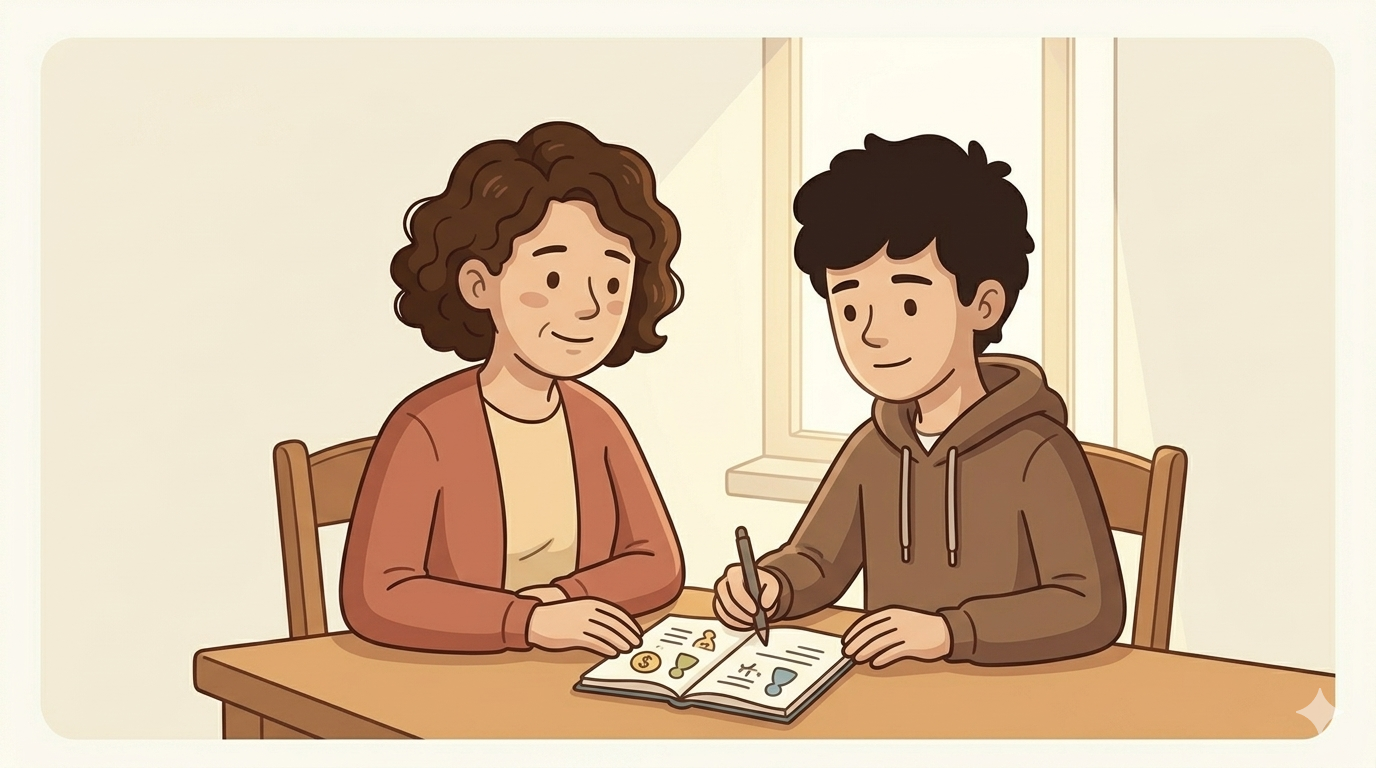
You don't have to reveal every number. But secrecy teaches shame. Try: "I make enough for what we need and some of what we want. Here's how I think about it." Then explain one real thing about how your household finances actually work.
Normalizing money conversations is the single most powerful financial gift you can give your teenager. It tells them: money is something we think about and talk about openly, not something we fear or hide.
At some point, explicitly tell your teenager: most adults were never taught about money either. It's not a sign of intelligence or character. It's a skill, like reading or driving, that has to be learned.
Then tell them: "I want you to know about money before you need to figure it out the hard way." That one sentence signals that money is learnable, that they're worth teaching, and that you're on their side.
My mom once said to me: "You didn't turn out how I hoped." I was 14.
I thought she meant me as a person. But what I heard underneath, what I carried for years, was: you don't deserve good things. You're not worth much.
It took me years of inner work and learning to understand that this one moment had quietly shaped how I thought about money, success, and what I was allowed to want for myself.
I didn't know my beliefs were broken. I just thought I was someone who "wasn't good with money."
When I finally understood what had actually happened, that it was a set of learnable beliefs, not a fixed personality, everything changed. And I was furious that nobody had told me sooner.
Available on Amazon · ⭐ 4.8 · 14 verified reviews
Here's what I want you to know: your teenager's relationship with money right now doesn't tell you anything about who they'll become. It tells you they're missing a set of beliefs and tools. That's all. Beliefs can be rebuilt. Tools can be given. And the window to do it is still open.
Between ages 12 and 18, your teenager's brain is in its most adaptable state. The money beliefs forming right now, whether financial success feels available or out of reach, whether earning feels possible or threatening, will shape their financial decisions for decades.
This isn't meant to frighten you. It's meant to tell you: what you do now matters. And it's not too late.
Learning a healthy money belief at 14 takes a few honest conversations over a few weeks. Rebuilding a distorted one at 28 means fighting a decade of ingrained assumptions.
The beliefs don't get easier to reshape with age. They get harder. Because every year that passes, the scarcity mindset becomes more familiar. The idea that "money is just not something I'm good at" becomes more deeply embedded. The window narrows.
Every month your teenager spends without these tools is another month of reinforcing the wrong story about themselves.
A few things parents tell me when I share all of this:
I hear this from nearly every parent. And nearly every one of them is surprised. Money Skills for Teens was written specifically for teenagers who don't think of themselves as "money people." It opens with a quiz called What's Your Money Personality? and most teens can't stop once they've started. Multiple parents have told me their teenager finished it in a weekend because they couldn't put it down.
Talking about money is a great start. But there's a difference between occasional money conversations and a teenager having a structured understanding of budgeting, credit, investing, taxes, and earning. Most teens who grow up in financially communicative families still lack that framework. The conversations you're already having become far more powerful when they have the vocabulary and structure to make sense of them.
For deep clinical issues, yes, professional support matters. But for most teenagers, the issue isn't clinical. It's an absence of financial education and a set of unchallenged beliefs absorbed from their environment. A book that teaches specific skills and directly addresses specific beliefs can accomplish in weeks what years of vague guidance never does. And if therapy is part of the picture, this book gives them concrete tools to practice between sessions.
Maybe. But how long did it take? How much did the figuring-out cost you, in bad financial decisions, in stress, in years of feeling behind? The fact that you navigated it doesn't mean your teenager needs to go through the same years of trial and error, especially when there's a clear, practical alternative.
A year from now, your teenager will be somewhere.
If nothing changes, they'll probably be in a familiar place: still spending without thinking, still absorbing the belief that money is scarce or secret or not for them, still unequipped for the financial decisions that are coming faster than you think.
At 18, they leave for college with no budgeting skills and no framework for financial decisions. They get a credit card offer in the mail. They sign up. Within a year, they owe $3,000 they can't pay back. They feel ashamed. They don't tell you.
At 22, they get a job offer. The salary is $15,000 below market rate, but they don't know that, because they've never learned how to evaluate a number. They accept it. They feel grateful. They shouldn't be.
At 30, they call you. "Mom, I need help with rent." Or they don't call. They're too proud. And they quietly spiral into debt that will take a decade to climb out of.
This isn't a worst-case scenario. This is the average financial trajectory for young adults who never received financial education at home. And the hardest part? They won't blame their upbringing. They'll say "I'm just not good with money" and believe it.
Your teenager, not in five years but in a few months, starts making different choices. They notice their spending. They talk about money without shutting down. They earn their first $50 themselves and come home genuinely proud of it. You realize you've stopped carrying the quiet worry. Not because you stopped paying attention. Because there's less to worry about.
That's what happens when a teenager gets the right tools at the right time.
"This guide does a great job breaking down the basics of money in a way that feels simple and practical. The sections on budgeting, saving, and building confidence around finances are especially helpful and easy to follow. I liked how straightforward everything was, and it feels like a solid resource for any teen who needs a clear introduction to managing money and making smarter choices early on."
"What I love most is how Ashford makes everything relatable. She uses real-life examples and simple language to explain things like how to set up a budget, why saving is important, and how to start thinking about investing, even if you're just earning allowance or a part-time job wage. It's like having a conversation with a friend who just happens to know a lot about saving."
"It's been pretty helpful to my young one. It explains stuff like budgeting and saving in a way that's not boring or confusing for a teen. The quizzes and examples kept him interested, and he's already talking about setting up a savings plan, which makes me smile."
Everything in this article is a starting point. The conversations you begin, the questions you ask, the environment you build, these matter enormously.
But there's a limit to what a parent can teach directly. At some point your teenager needs something that speaks to them, in their language, about their world, without the complicated dynamics of a parent trying to help.
That's why I wrote Money Skills for Teens.
It doesn't lecture. It opens by showing teenagers that almost everything they believe about money was absorbed from their environment, not consciously chosen, and that those beliefs can be examined and changed. Before anything else, a teenager reading this feels seen, not judged.
From there it moves through nine things: how money actually works, how to budget and save, how to earn, how credit scores are built, how taxes function, and how to start building wealth before turning 20. Not theory. Practical tools with quizzes, exercises, and a real financial plan they build chapter by chapter.
A parent wrote to me: "My 15-year-old read it in two days and is already talking about opening a savings account. That has never happened before."
If something in this article resonated, if you recognized your teenager in these pages, this might be the right book at the right time.
Practical tools in language that actually reaches them. Available on Amazon in Paperback, Kindle, and Hardcover.
Get Money Skills for Teens on Amazon →Amanda Ashford is the author of the Empowering Skills for Teens series. She writes about social confidence, financial literacy, and the skills teenagers need that nobody teaches them. Her books have 4.8 stars on Amazon and readers in 12 countries.
Written for teenagers. In a voice that doesn't talk down, lecture, or bore.
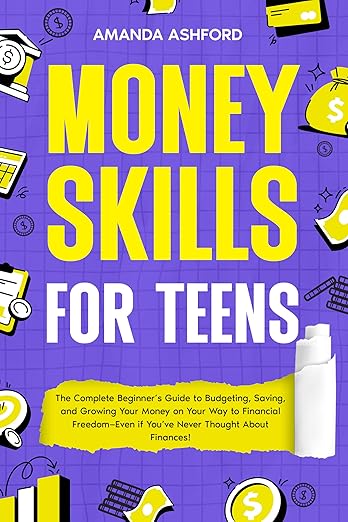
The Complete Beginner's Guide to Budgeting, Saving, and Growing Your Money on Your Way to Financial Freedom. Even if You've Never Thought About Finances.
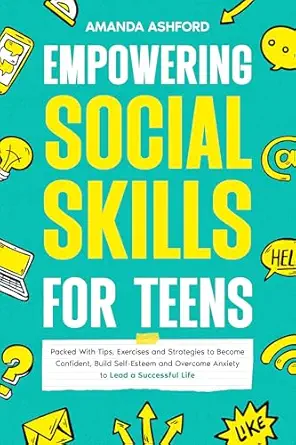
How to Talk to Anyone, Make Friends, Handle Difficult Situations, and Build the Confidence That Lasts a Lifetime.